
Exterior Systems That Work Together Year-Round
Additional Services in Salt Lake City & Murray, UT, for properties where roofing, siding, windows, and gutters must function as a unified weather barrier
Exterior Home Improvement Services in Utah
Your home's exterior is your first line of defense against Utah's changing weather. From snow and ice to wind, rain, and summer heat, every exterior component works together to protect your investment. At Kimball Roofing & Siding, we provide complete exterior remodeling services, including roofing, siding replacement, window installation, and seamless gutter systems designed to improve curb appeal, increase energy efficiency, and provide lasting protection for residential and commercial properties.
As an employee-owned company with decades of experience, we're committed to delivering quality craftsmanship, premium materials, and dependable service. Whether you're replacing one exterior component or planning a complete renovation, our team is here to help.
Get a Quote
Get a Quote
We will get back to you as soon as possible.
Please try again later.
Complete Exterior Remodeling Solutions
Your roof isn't the only part of your home protecting your family from the elements. Siding, windows, gutters, soffit, and fascia all work together as one exterior system. When one component begins to fail, it often affects the others.
Our exterior services include:
- Residential roofing
- Commercial roofing
- Siding replacement
- Replacement windows
- Seamless gutter installation
- Gutter protection systems
- Soffit & fascia services
- Exterior storm damage restoration
Professional Siding Replacement & Installation
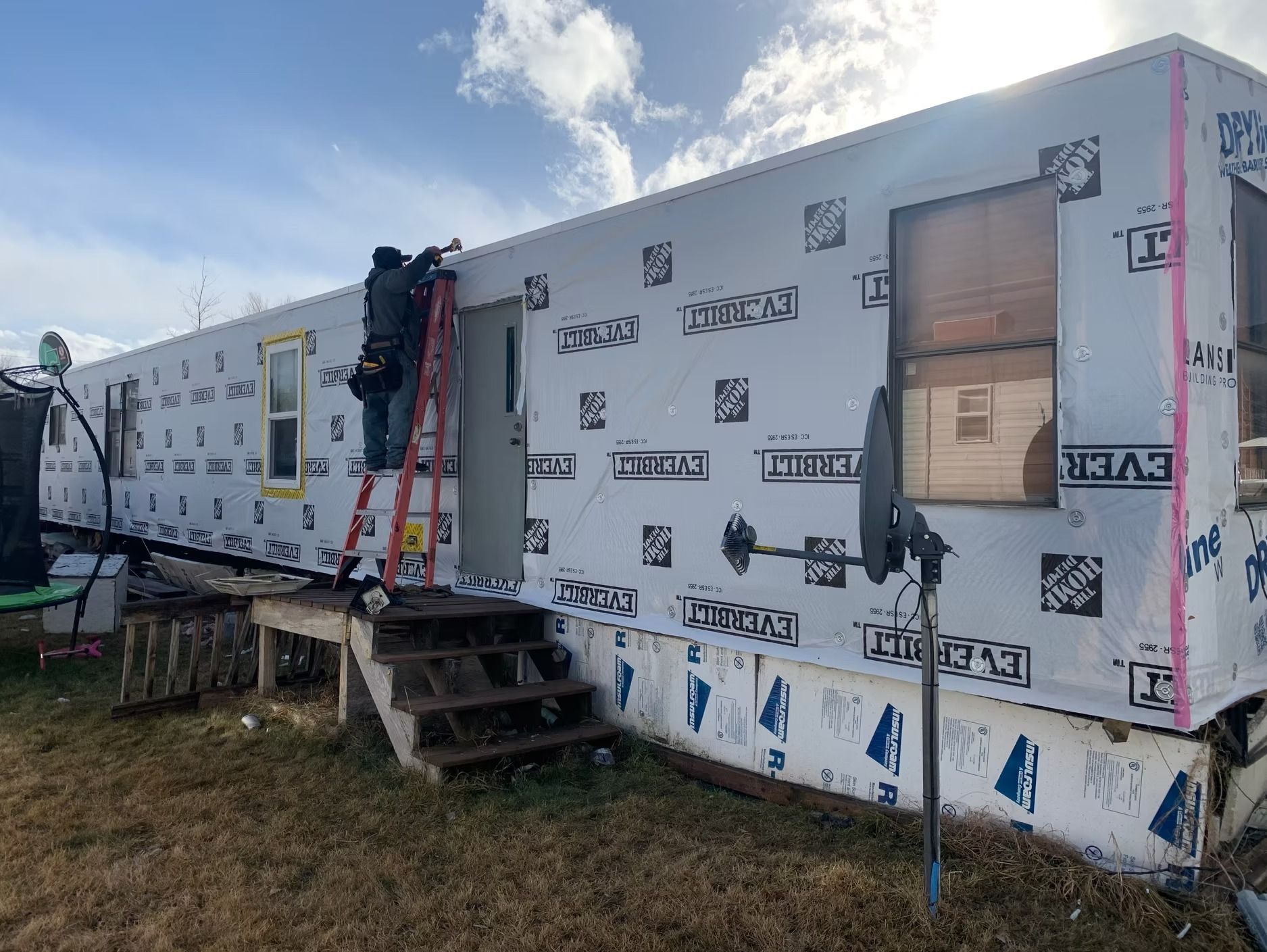
New siding protects your home's structure while giving it a fresh, updated appearance. We install durable siding products designed to withstand Northern Utah's climate while improving insulation and reducing maintenance.
With professionally installed siding, homeowners can enjoy:
- A refreshed exterior appearance
- Greater protection from moisture and weather
- Improved energy performance
- Less exterior maintenance over time
- Added long-term value and durability
Energy-Efficient Window Replacement
Replacing outdated windows can improve comfort, reduce energy loss, and enhance your home's appearance. Our energy-efficient replacement windows help maintain indoor temperatures while lowering heating and cooling demands.
Our replacement windows are designed to provide:
- Increased year-round comfort
- Improved energy efficiency
- Brighter, more inviting living spaces
- Reduced outside noise
- Enhanced curb appeal and resale value
Seamless Gutter Installation & Water Management
A quality gutter system protects much more than your roof. Our seamless gutters are custom-fit to direct water safely away from your home, helping prevent costly moisture damage.
Our seamless gutter systems help safeguard your property by:
- Channeling water away from your foundation
- Helping prevent soil erosion and standing water
- Protecting siding, fascia, and soffits from water damage
- Supporting proper roof drainage during heavy storms
- Reducing maintenance with optional gutter protection systems
Why Exterior Systems Work Together
Your home's exterior functions as one complete protective envelope. Roofing, siding, windows, and gutters all work together to prevent moisture intrusion, improve energy efficiency, and protect your home's structure.
When one system fails, it often impacts the others.
Examples include:
- Failing gutters can allow water behind siding, causing rot and moisture damage.
- Older windows increase heating and cooling costs while allowing drafts.
- Damaged siding exposes framing and insulation to water intrusion.
- Poor roof drainage can contribute to foundation settlement and landscape erosion.
Taking a whole-home approach helps maximize both protection and long-term value.
Residential & Commercial Exterior Services
Kimball Roofing & Siding proudly serves both homeowners and commercial property owners throughout Northern Utah. Whether you need a roof replacement, new siding, energy-efficient windows, or seamless gutters, we provide complete exterior solutions tailored to your property's needs.
Why Choose Kimball Roofing & Siding
Property owners throughout Northern Utah continue to trust Kimball Roofing & Siding because we deliver complete exterior solutions backed by quality workmanship and decades of industry experience.
When you work with us, you receive:
- Employee-owned company dedicated to customer satisfaction
- Decades of roofing and exterior remodeling experience
- Complete exterior expertise under one contractor
- Residential and commercial service capabilities
- Knowledge of Northern Utah's climate and weather challenges
- Premium products from trusted manufacturers
- Professional installation crews
- Honest recommendations and dependable service
Our goal is simple, protect your investment while improving the beauty, efficiency, and long-term performance of your property.
What Homeowners Want to Know About Exterior Work
Exterior projects raise questions about sequencing, material durability, and how improvements will perform in weather conditions unique to the Wasatch Front and surrounding high-elevation areas.
What order should exterior projects be completed?
Roofing comes first because it establishes the water management system that everything else relies on, followed by windows to seal penetrations, then siding to protect wall cavities, and finally gutters to control runoff—this sequence prevents each new installation from damaging completed work.
How do I know if my siding is failing?
Look for warping that creates gaps where wind-driven moisture can enter, fading that indicates UV degradation has made the material brittle, and sections that sound hollow when tapped because moisture has rotted the sheathing underneath.
What windows perform best in Utah's climate?
Dual-pane units with low-emissivity coatings reduce heat loss during winter while reflecting summer sun, and argon gas fills improve insulation values enough to prevent interior condensation when outdoor temperatures drop below fifteen degrees and indoor humidity remains normal.
Why do gutters overflow during spring?
Snowmelt in Salt Lake City and Heber City produces runoff volumes far exceeding typical rainfall, and gutters sized for summer storms can't handle the flow when several feet of accumulated snow liquefies over a few warm days—proper sizing accounts for this seasonal spike.
Can I replace just one exterior component?
Yes, though improvements work better when planned together—new energy-efficient windows deliver less savings if the siding leaks air, and new gutters won't solve foundation moisture if roof drainage still overwhelms the system during peak runoff.
Whether you're replacing aging siding, upgrading your windows, installing seamless gutters, or planning a complete exterior renovation, Kimball Roofing & Siding provides professional solutions built to withstand Utah's demanding weather conditions.
We proudly help homeowners and businesses improve the beauty, efficiency, and protection of their properties with quality craftsmanship and dependable service. Contact Kimball Roofing & Siding today to schedule your consultation and discover how one trusted contractor can handle all of your exterior improvement needs.